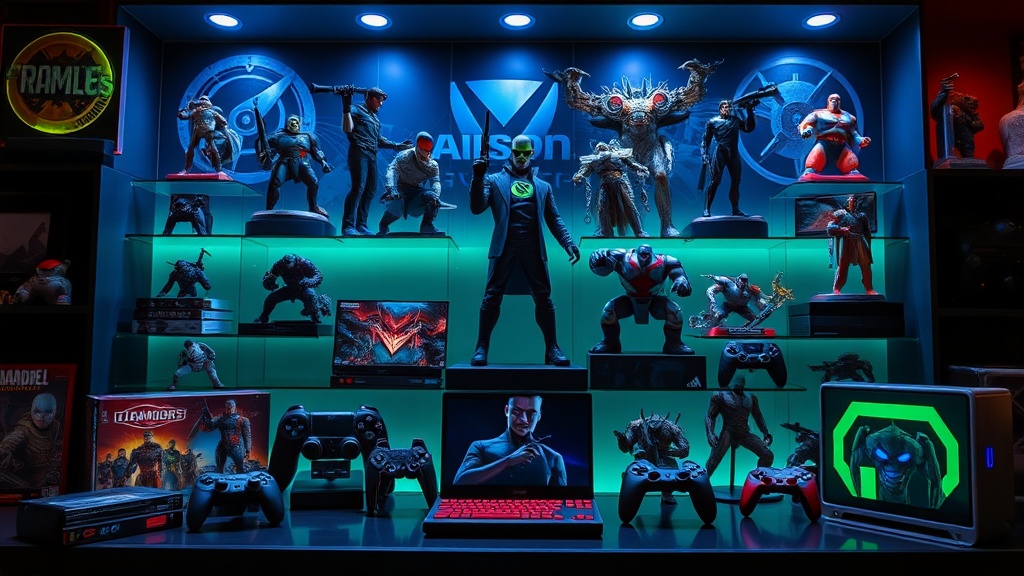
The Ultimate Guide to Displaying Your Gaming Collectibles

Your gaming collectibles deserve better than a cardboard box in the closet. This guide covers everything from shelf selection and lighting to dust management and security—helping transform loose items into a display that sparks conversation and protects investments worth thousands (sometimes tens of thousands) of dollars. Whether the collection includes vintage The Legend of Zelda cartridges, limited-edition figures, or sealed consoles from the '90s, the right presentation makes all the difference.
How Do You Choose the Right Display Case for Gaming Collectibles?
The best display case balances visibility, protection, and accessibility. For most collectors, this means glass-front cabinets with UV-filtering properties and adjustable shelving that accommodates items of wildly varying dimensions.
Start by auditing the collection. Sealed games and small amiibo figures need shallow shelving—around 8 to 10 inches deep. Consoles and larger statues demand 14 to 18 inches. The IKEA DETOLF cabinet ($69.99) remains a community favorite for smaller items, offering five glass shelves and a minimal footprint. For mixed collections, the BILLY/OXBERG combination with glass doors provides flexibility at roughly $150.
That said, serious collectors often graduate to dedicated display furniture. The Sauder collection includes several glass-door models with integrated lighting channels. For high-value items, consider museum-quality cases from Gaylord Archival—expensive (often $800+), but designed specifically for preservation with specialized glazing that blocks 99% of UV radiation.
Here's the thing: most pre-built furniture isn't perfect. Many collectors modify IKEA units—adding weather stripping to seal gaps, installing magnetic locks to keep cases closed, or retrofitting LED strips into hollow frames. The community over at r/gamecollecting shares hundreds of modification tutorials worth exploring before making a purchase.
Shelving Materials Matter
Wood composite shelves sag over time. Tempered glass looks elegant but creates reflection issues and offers zero protection against dust infiltration. Acrylic (often called plexiglass) provides a middle ground—lighter than glass, more durable, but prone to scratching.
Metal wire shelving has no place in collectible display. The wire leaves marks on boxes, allows small items to slip through, and looks institutional. Solid surfaces only.
What's the Best Lighting for Gaming Collectible Displays?
LED strip lighting with a color temperature between 4000K and 5000K provides the best balance for showcasing gaming collectibles without causing damage. This range mimics natural daylight, making colors appear true while minimizing the heat and UV output that degrades packaging and fades artwork.
Avoid halogen and incandescent bulbs entirely. These generate significant heat—sometimes raising internal case temperatures by 15 to 20 degrees Fahrenheit. Heat accelerates plastic degradation, yellows cardboard, and can cause adhesives to fail. Even brief exposure adds up over years.
The catch? Not all LED strips are created equal. Cheap options from Amazon often have poor color rendering (CRI below 80), making that pristine SNES box look washed out or oddly tinted. Look for strips with CRI 90+ ratings— brands like HitLights and Philips Hue Play offer reliable options between $30 and $80 per setup.
Position lights to eliminate glare. Top-down lighting inside cabinets works better than front-facing strips, which create reflections on glass surfaces. For open shelving, consider picture lights mounted above each shelf—the IKEA TERTIAL work lamp ($8.99) with a warm LED bulb works surprisingly well for spotlighting specific pieces.
Worth noting: some collectors install motion sensors or smart switches to limit light exposure. The less time items sit under artificial illumination, the longer they last. Smart plugs from TP-Link Kasa ($15-25) integrate with Alexa and Google Home, allowing scheduled on/off cycles that mimic museum lighting protocols.
How Do You Protect Gaming Collectibles from Dust and Environmental Damage?
Sealed storage provides the only reliable dust protection—every open display, no matter how carefully maintained, requires weekly cleaning. For irreplaceable items, this trade-off usually favors glass-front cases over open shelving.
Climate control matters more than most collectors realize. Ideal storage conditions sit between 65-70°F with 40-50% relative humidity. High humidity promotes mold growth on cardboard and causes corrosion on metal cartridges and pins. Low humidity makes plastics brittle and causes shrink wrap to loosen or tear.
Portland's climate—where Eero Nguyen operates—actually suits collecting well. The mild temperatures and moderate humidity require minimal intervention. Collectors in Florida or Arizona face bigger challenges. Dehumidifiers become necessary equipment, not optional accessories. The Home Depot stocks compact models like the Eva-Dry E-333 (renewable, no power required) for small cases, or compressor-based units for entire rooms.
Protective Accessories Worth Buying
| Item Type | Recommended Protection | Approximate Cost |
|---|---|---|
| Cartridge games | Plastic box protectors (RetroProtection) | $0.50 - $1.50 each |
| CD/DVD games | Jewel cases or polyethylene sleeves | $0.10 - $0.30 each |
| Amiibo/Figures | Acrylic display cases (TNV Direct) | $5 - $25 each |
| Consoles (boxed) | Large polyethylene bags + acid-free backing | $3 - $8 each |
| Strategy guides | Mylar sleeves (BCW Supplies) | $0.25 - $0.50 each |
The polyethylene versus PVC debate confuses many newcomers. PVC (polyvinyl chloride) releases acids over time that damage artwork and cardboard. Only use archival-grade polyethylene, polypropylene, or polyester (Mylar). BCW Supplies and RetroProtection specialize in gaming-specific sizes—standard trading card sleeves won't fit most game boxes.
That said, over-protection creates its own problems. Sealing items in airtight containers without desiccant traps humidity inside—creating microenvironments worse than open air. Always include silica gel packets in sealed storage, and replace or recharge them every 6-12 months.
How Should You Arrange Gaming Collectibles for Maximum Impact?
Effective arrangement follows visual hierarchy—place the rarest or most visually striking items at eye level, with supporting pieces arranged to create flow and context. This isn't about showing everything; it's about curating a display that rewards attention.
Grouping by theme works better than strict chronology. A shelf dedicated to handheld evolution—Game & Watch leading to Game Boy leading to Switch—tells a story. Another approach groups by franchise: every Metroid release together, every variant displayed. The "system shelf" approach (all PlayStation items together) helps when the collection spans many platforms.
Here's the thing: negative space improves displays. Cramming shelves edge-to-edge creates visual noise. Leave breathing room between items—2 to 3 inches minimum. The eye needs somewhere to rest. This also reduces accidental damage when removing pieces for inspection or photography.
Elevation helps. Acrylic risers (available from Amazon, Michael's, or specialized retailers like Collector-Cache) lift items at varying heights, preventing flat, boring rows. A $10 set of kitchen cabinet organizers often works as well as $30 "collectible display risers"—same acrylic, different packaging.
The Photography Factor
Many collectors photograph their displays for insurance documentation, sale listings, or community sharing. Arrange with this in mind. Items placed deep in cabinets photograph poorly due to glass reflection and shadows. Consider a "rotation shelf"—a dedicated space where pieces move temporarily when being photographed or examined, separate from the main display.
What Security Measures Protect High-Value Gaming Collections?
Insurance and physical security matter once collections exceed a few thousand dollars in value. Standard homeowner's policies often cap collectibles coverage at $1,000-$2,500 without additional riders. Document everything—photographs, purchase receipts, current market values from PriceCharting or eBay sold listings.
Physical security ranges from simple to sophisticated. At minimum, install cabinet locks (magnetic child locks work for light security; keyed locks for serious protection). For rooms housing substantial collections, a dedicated door lock separates the collection from general home access.
Environmental monitoring provides early warning. WiFi-connected sensors from Govee ($30-50) track temperature and humidity, sending phone alerts when conditions drift outside safe ranges. Water leak detectors matter too—gaming collections often live in basements, and a failed water heater destroys decades of careful accumulation in minutes.
The catch? Security theater feels good but often fails. Cheap cameras that aren't monitored, locks that can be jimmied with a credit card, or safes that aren't bolted down provide false confidence. Spend the security budget where it matters: good insurance documentation, climate control, and proven display cases that physically protect items from the environment.
Worth noting: community matters for security too. Local collecting groups (often found through Facebook or Discord) share warnings about regional theft patterns, sketchy buyers, and emerging scams. The gaming collectible market attracts counterfeiters—having trusted contacts who can authenticate suspicious purchases prevents expensive mistakes.
Your collection represents years of hunting, saving, and careful acquisition. The right display honors that investment while making the hobby visible and shareable. Start with one solid cabinet, add proper lighting, and build systematically. The transformation from cluttered storage to curated gallery happens gradually—and every improvement protects value while increasing daily enjoyment.